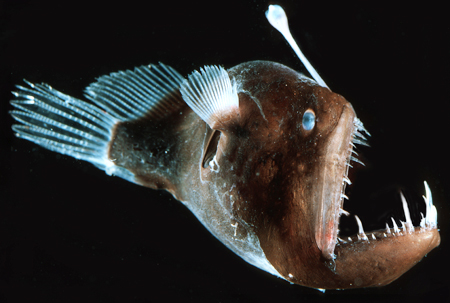
The Anglerfish (Lophiiformes) are best known for their ugly appearance, but it doesn’t take first place as that belongs to the Blobfish. Anglerfish are angry looking deep-sea creatures, and they have a right to be. It can be found in what’s known as some peoples worst nightmare, at the bottom of the lonely, light-less bottom of the ocean.
There are over 200 species of Anglerfish identified, and most can be found up to a mile below the murky depths of the Atlantic and Antarctic oceans, but some are also found in shallow tropical environments. They’re generally a dark gray to dark brown in colour, with large heads and enormous crescent-shaped mouths that are full of sharp, translucent teeth. They are a carnivorous species, and can weigh up to 110 pounds when fully grown. The length of the fish varies, some can reach up to 3.3 feet in length, but most are much smaller, typically less than a foot. In the species Ceratioidei, males are significantly smaller than females and can be several magnitudes smaller.
Most adult females have the distinctive feature of the “fishing rod” on the top of their heads. This is a luminescent organ called the “esca” which is found at the tip of the modified dorsal ray. The organ has the obvious purpose of luring prey in the dark, deep sea environments, but also serves the purpose of attracting males’ attention to facilitate mating. The rod is inhabited by large numbers of bio-luminescent bacteria, enclosed in a cup-shaped reflector that has been said to contain crystals, most likely guanine.
The male Anglerfish lives the first part of its life as a free as it possibly can be, but once it encounters a female, the male Anglerfish then becomes a parasitic sperm-producing mate. The male latches onto the female with its sharp teeth, and over time physically fuses with her, connecting to the females skin and bloodstream. The male will eventually lose it’s eyes and all internal organs except for the testes. Females will carry 6 or more males on their body at a time.
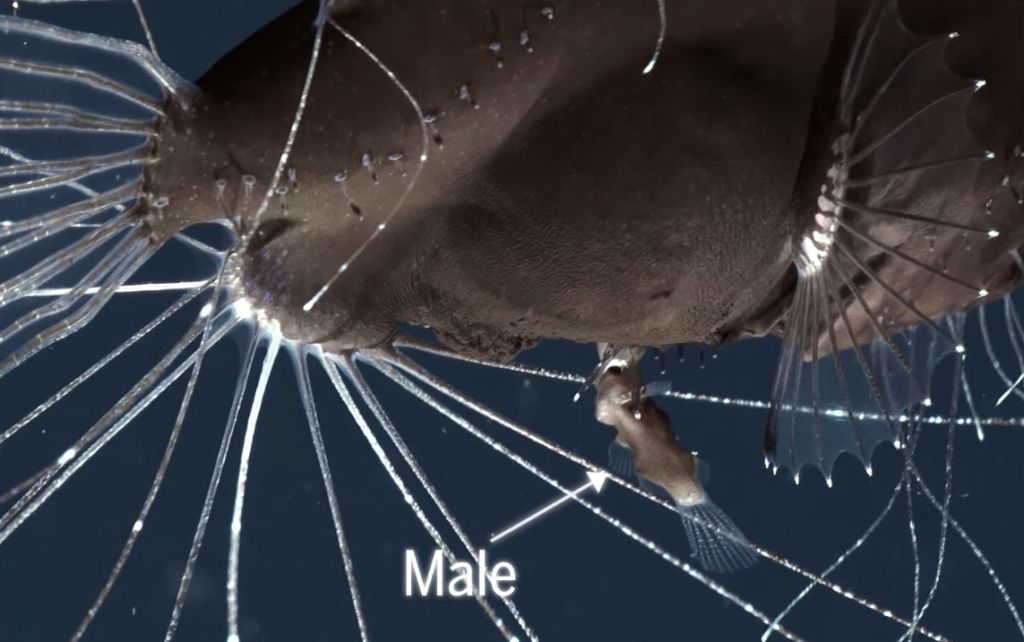
The behaviour of Humpback Anglerfish has only been caught on camera very few times. Near Monterey, California, at around 1474 metres down a female ceratioid anglerfish was filmed for 24 minutes. The video showed that when approached the fish retreated rapidly, but when it wasn’t approached the fish was showed to be drifting passively, this is most likely due to low-energy. The footage showed that when the fish swam it was at a speed of 0.24 body lengths per second, this lethargic behaviour of the ambush predator is ideal for this energy-poor environment of the deep sea.
Anglerfish are either benthic or pelagic. Benthic species live on the sea floor and most are known as “ambush predators”. Ambush predators sit and wait for their prey to come along, and then launch a rapid surprise attack. Pelagic species swim freely, and can also be ambush predators. Anglerfish will drift and wait while their fishing rod lures prey towards them. The jaw and stomach of the Anglerfish can extend to consume prey almost twice its size. Due to the small amount of food available, the Anglerfish has adapted to store food when there is abundance.
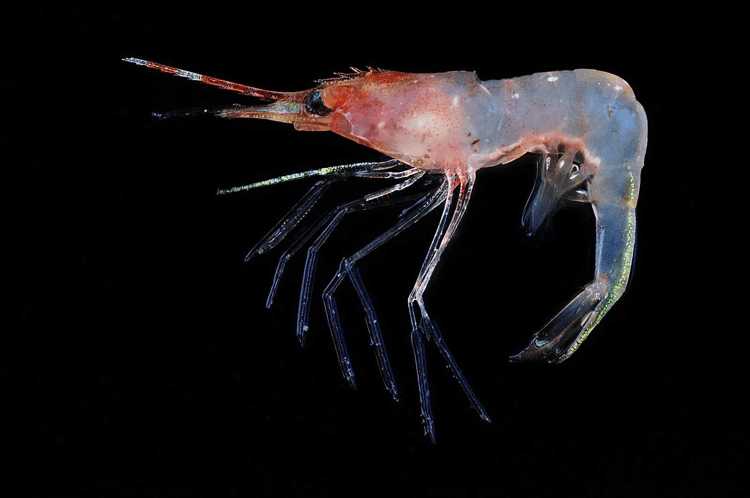
Some Anglerfish can move their esca to make it resemble a prey animal, which actually lures the real prey close enough for the Anglerfish to devour whole. It’s been found that some deep-sea Anglerfish of the bathypelagic zone can give off light from their esca to make it easier to attract their prey. A study was conducted on the stomach contents of an Anglerfish that was found off the Pacific coast of Central America found that these fish primarily ate two categories of benthic prey: crustaceans and teleost fish. Although it seemed that they had a frequent prey, which were pandalid shrimp. Whereas over 50% of the stomachs that were examined were empty, which supports the observations that Anglerfish are low energy consumers.
In 2010, 3 species of anglerfish were added to the seafood red list – a list of fish that are commonly sold worldwide that has a high likelihood of being sourced from unsustainable fisheries. These 3 species include, the American angler (Lophius americanus), the angler, which is also known as a monkfish (lophius piscatorius) and the black-bellied angler (lophius budegassa).
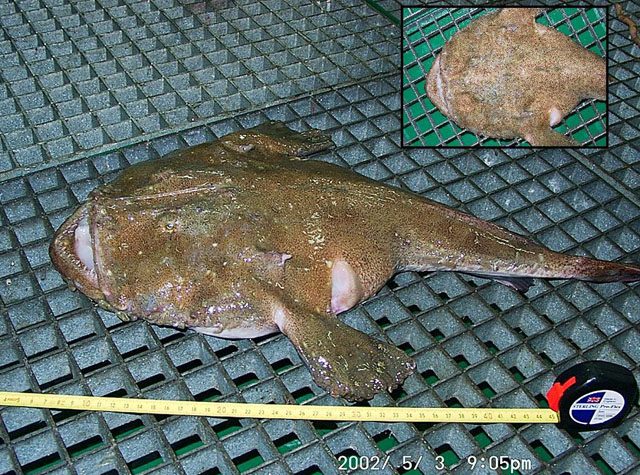
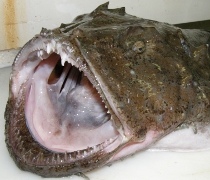
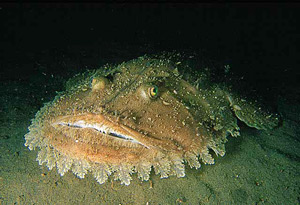
Europe and North America have used the tail meat of the fish form the genus Lophius, known as either Monkfish or Goosefish (North America). It’s widely used in cooking and is often said to have a lobster tail taste and texture. In Asia, Korea and Japan, they cook Monkfish liver which is known as “ankimo”, its considered a delicacy. Anglerfish are heavily consumed in South Korea, and is one of the main ingredients in dishes such as Agujjim.
 Cool Facts About The Ocean That No One Asked For
I wish a guy would sink his teeth in me and fuse.
LikeLiked by 1 person
LOL
LikeLike