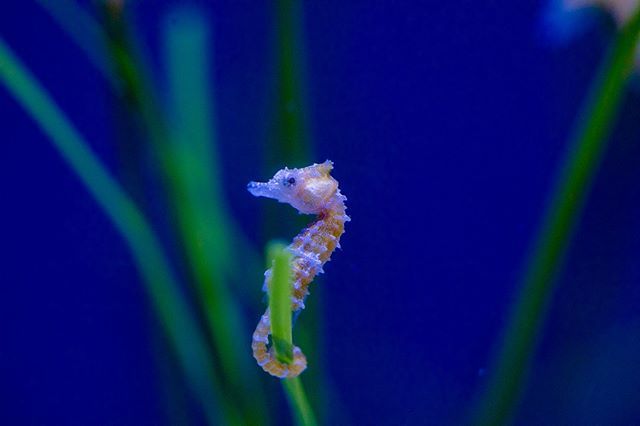
There are 45 known species of Seahorse to date, they are mainly found in shallow tropical and temperate salt water around the world. Their habitats mainly consist of sea grass beds, estuaries, coral reefs and mangroves. Only 3 of the 45 species of sea horse form territories, (hippocampus guttulatus, hippocampus hippocampus and hippocampus fuscus), the males stay within 1m2 (10 sq ft) of habitat, while the females have over one hundred times the space in comparison to the male, both territories overlap.
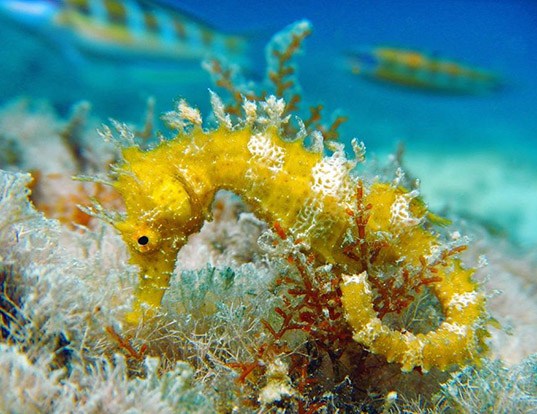
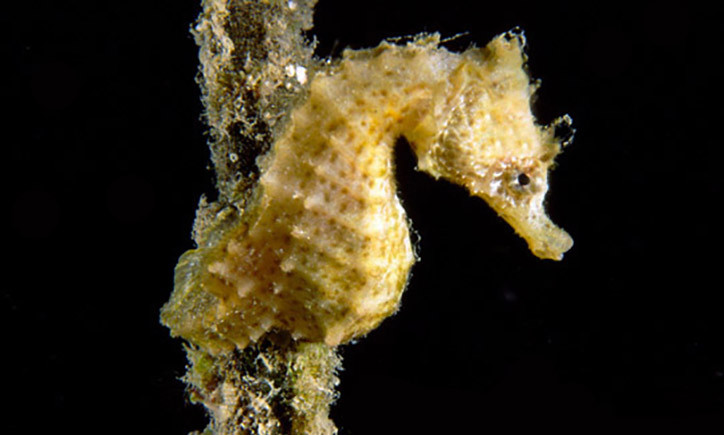
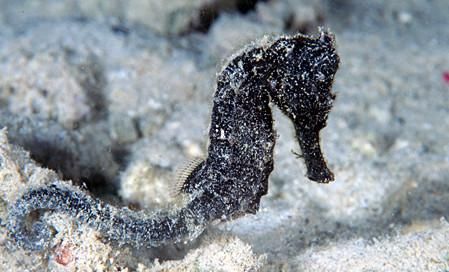
Before mating, seahorses preform a courtship that can last up to several days. There are 4 phases of courtship.
Phase 1- Initial courtship. This behaviour takes place 30 minutes after dawn on each courtship day all the way up to copulation. The male and female remain apart during the night, but after dawn they come together side by side, they brighten, and engage in courtship behaviour for about 2-38 minutes. The male approaches the female, brightens and then begins to quiver, the female will follow the male with her own display, where she also brightens and quivers about 5 seconds later. As the male quivers he will rotate his body in the females direction, who then rotates her body away. During phase 1 both the tails of the seahorse are positioned within 1cm of each other on the same marine plant and both bodies are angled slightly outward from the point of attachment. The female will shift her tail attachment site, causing the pair to circle their common “hold-fast” (chosen marine plant).
Phase 2- Pointing and pumping. This phase can last up to 54 minutes. The female begins her pointing posture by leaning her body towards the male who will then lean away and quiver.
Phase 3- Pointing and pointing. The females will begin to brighten and assume the pointing position, while the male responds with their own brightening and pointing display. This phase ends with the male departing, and usually lasts up to 9 minutes. This can occur 1-6 times during the courtship period.
Phase 4- Rising and copulation. This is the final step of the courtship, and can include 5-8 bouts of courtship. Each bout starts with both male and female anchored to the same plant usually around 3cm apart, they are usually facing each other and are still bright in colour from the previous phase. During the first bout, following the facing behaviour, the seashorses will rise upward together anywhere from 2-13cm in a water column. During the final rise, the female will insert her ovipositor (a tube like organ used by some organisms instead of laying eggs) and transfer her eggs through an opening into the males brood pouch.
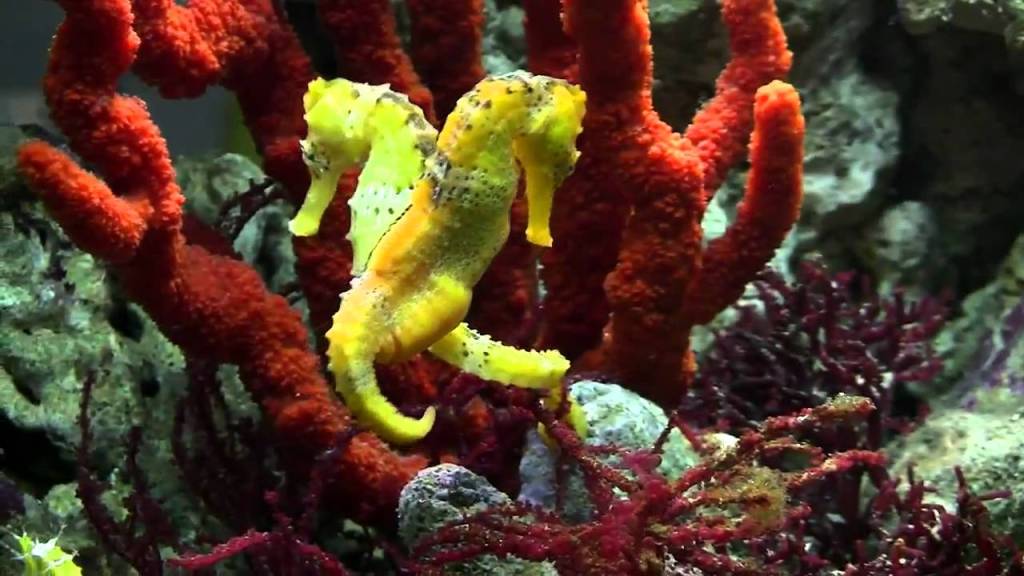
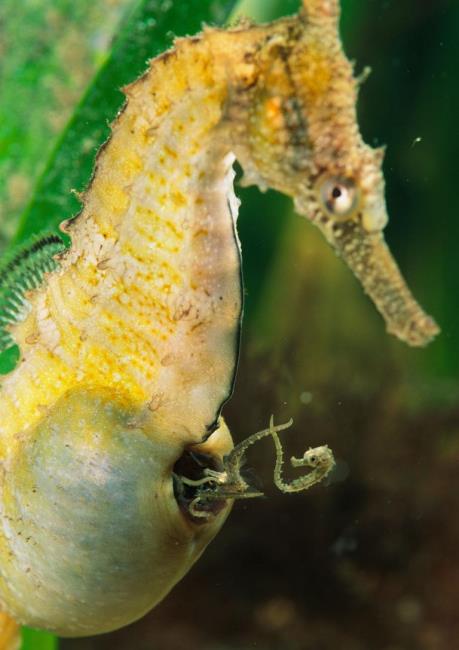
Once the eggs are deposited into the males brood pouch, they are surrounded by a spongy tissue. During this time, the male supplies the eggs with prolactin, which is the same hormone found in pregnant mammals for milk production. The eggs hatch in the piuch, where the salinity of the water is regulated, this helps prepare the newborns for their life in the sea. This step is called, gestation, and in most species lasts between 2-4 weeks, the female will meet him daily for “morning greetings”.
When the eggs are ready to be born, the male typically does it at night so he is ready for the next batch of eggs in the morning for when his female returns. The number of fry born (seahorse babies) is dependent on the species, between 5 and 1500 fry can be born during the birthing process. Unlike almost every other fish species, sea horses do not nurture their young after birth. Fry are vulnerable to predators and ocean currents which wash them away from feeding grounds or into temperatures too extreme for their delicate bodies, this explains why less than 0.5% of infants survive to adulthood.
Seahorses don’t mate for life, however many species form pair bonds that last throughout at least the breeding seasons, its been proven that females are loyal to the males throughout the pregnancy and do not mate again until he is ready, and will often return to the same mate time and time again. Some species have been studied and shown to switch mates when the opportunity arises, hippocampus abdominalis and hippocampus breviceps have shown to breed in groups, showing no continuous mate preference. Many species’ breeding habits have not been studied, so it is difficult to determine which species are monogamous.
Seahorses don’t have a stomach, so their food moves directly through their digestive system which is why they need to eat almost constantly. An adult sea horse will eat 50+ times a day, while a fry will eat an impressive 3000 times a day. Adult sea horses do not live in crowded habitats, it is suggested that due to their food source of plankton being so scarce, that only a handful of adults will live in a space the size of a tennis court.
Seahorses have independent eyesight, what this means is that they can move each eye in different directions at the same time. Meaning they can look forwards, and backwards. It’s suggested they have adapted to do this to keep an eye on moving predators around their habitats. Unlike their eyesight, their swimming is extremely poor. They rely on their dorsal fin which beats 30-70 times a second to help propel it along, while their pectoral fins that are either side of the head help with stability and steering.
Seahorses don’t have many predators, this is because they’re extremely bony and had to digest. But just because they don’t have natural predators, doesn’t mean they aren’t at risk due to humans. The traditional Chinese Medicine Trade takes in excess up to 150 million seahorses per year from the wild and are then used for all types of different medicine. The Curio Trade takes approximately one million sea horses from the wild per year, as well as shells and starfish, where they are deliberately left to die in the boiling sun. These are sold as souvenirs, which represents “the beauty of the ocean” when it’s one of the most inhumane and cruel things humans can do. The pet trade also takes an estimated one million seahorses from the wild per year, and it is suggested that less than 1,000 survive in tanks more for more than 6 weeks.
Plastic is a huge threat to the ocean, and it’s shown everywhere. One photo that shocked the world was the tiny sea horse propelling along with a cotton swap. The harsh and heartbreaking reality of what we’re doing to the oceans was really set in our minds. Seahorses hold onto floating debris with their tails, commonly sea grass, so they can move through the currents, but when there wasn’t anything to grab, this seahorse found the nearest piece of pollution and held on.
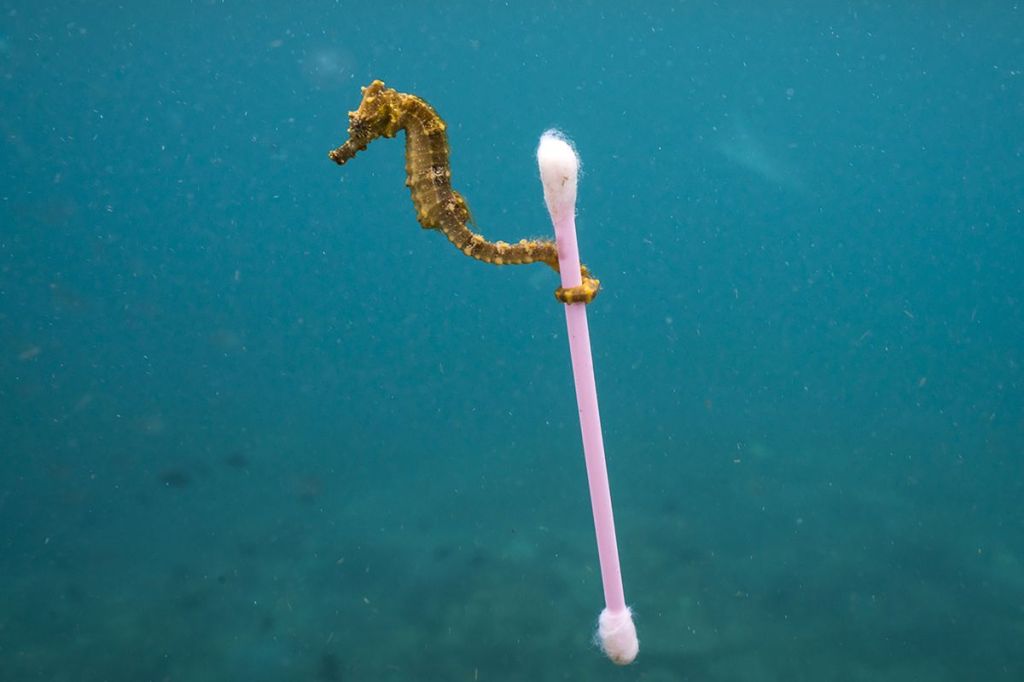
“What started as an opportunity to photograph a cute little sea horse turned into one of frustration and sadness as the incoming tide brought with it countless pieces of trash and sewage. This photo serves as an allegory for the current and future state of our oceans.” -Photographer Justin Hofman.
 Cool Facts About The Ocean That No One Asked For