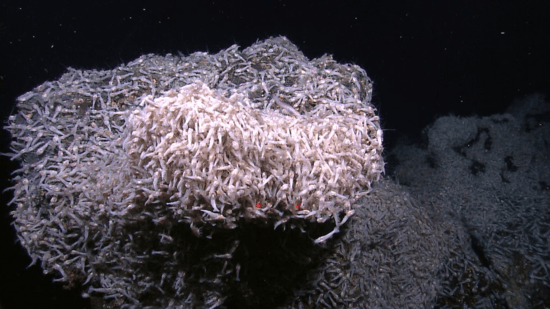
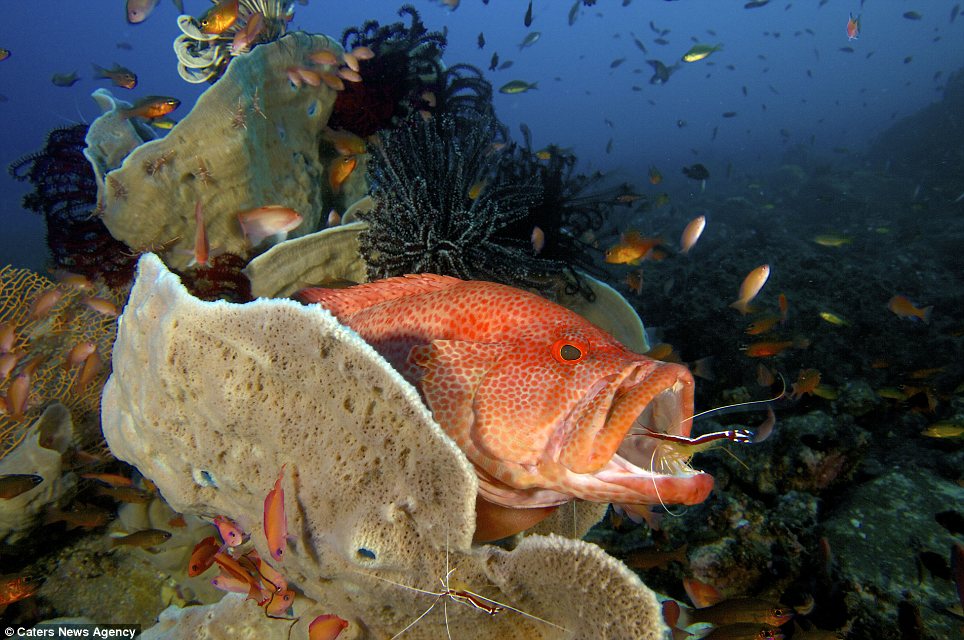
When we think of shrimps, we think of the tasty little orange creature that is found in over 100 seafood dishes. But what most people don’t realise is that there are over 2,000 different species of both shrimp and prawns all over the world, including fresh and marine waters. They play important roles in the food chain and are an important food source for larger animals ranging from fish to whales. Some shrimp have special jobs, like cleaning parasites from fishes mouths.
This species of shrimp, scientifically known as Rimicaris exoculata, lives up to 5,000 metres below the ocean surface, and are found in swarms around volcanic hydrothermal vents in the Mid-Atlandtic Range, where temperatures can exceed 400 degrees Celsius. Hydrothermal vents are close to an underwater volcano that generates heat as well as geological and chemical activity important for the development of certain life forms, such as the Deep Sea Shrimp. The water surrounding the chimney walls is a lot cooler, usually between 10 and 15 degrees Celsius.

Daylight does not penetrate to the depths of 3500m, and very dim light is given off by the hydrothermal vents themselves, it’s been found that to exploit this light, Rimicaris exoculata has evolved a modified compound eye (i.e ocular plate) on its dorsal surface. The eye occupies around 0.5% of the animal’s body volume, the morphology of this eye also suggests that Rimicaris exoculata is extremely sensitive to light.
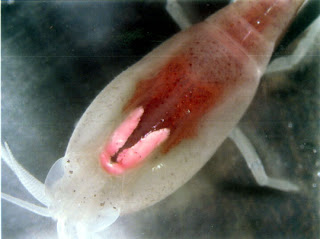
Without sunlight photosynthesis is impossible, but bacteria is able to produce organic matter in the hydrothermal vents via chemosysnthesis i.e using the energy of the chemical components. Once chemosynthesis is complete, life is born! The chemosynthetic bacteria that consume their energy from chemical reactions, rather than the sunlight use the elements from their environment, (Sulphur, Methane, Hydrogen, Iron etc.) to fix carbon and synthesise organic matter.
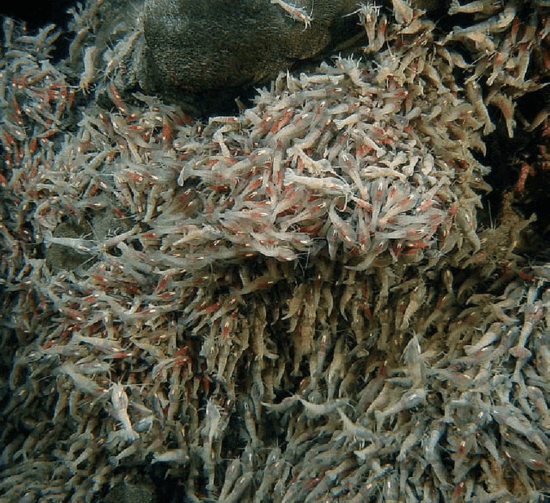
The eating behaviours of the Rimicaris exoculata have been observed and the gut-content that was analysed indicates that these shrimp ingest large amounts of sulfide particles from black smoker chimneys. It’s suggested that these shrimps are normal heterotrophs ( cannot produce its own food, instead taking nutrition from other sources of organic carbon, mainly plant or animal matter.), surviving on free-living microorganisms associated with black smoker chimneys.
 Cool Facts About The Ocean That No One Asked For